Farewell to the Gentleman Eye Surgeon
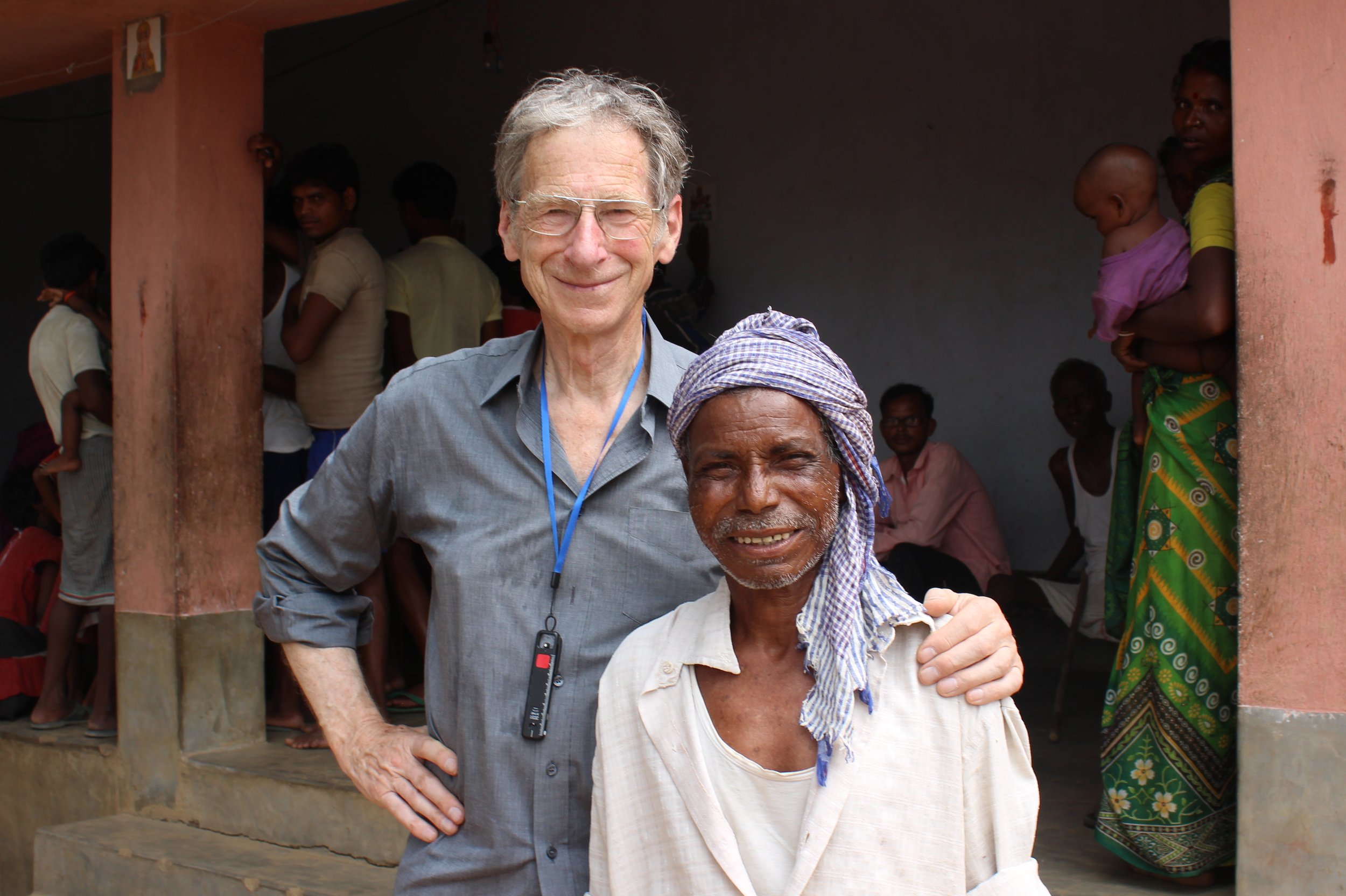
As Andy Richards and I proceeded hut to hut, screening for blind patients, a keen-sighted villager with a blue and white cloth wrapped around his head, approached us from the far end of the village.
‘You were my eye surgeon’ he proclaimed in Hindi, beaming, arms outstretched to Andy.
When I translated what he had said, Andy responded with characteristic bashfulness.
‘Surely not Lucy darling? Why would he remember me? You must have arranged this…’
This was not an inconceivable accusation - given that I had been trying to persuade Andy to retract his recent decision to stop operating (in spite of performing flawless cataract surgery into his 80s).
But it wasn’t true. I had not arranged the appearance of a happy former patient in order to guilt trip Andy into returning to microsurgery to cure the blind in Bihar. However, as he had restored sight to thousands and thousands since the year 2003, it was not statistically impossible that his patients would pop up like this.
At any rate, the man disappeared into a hut and came back with the evidence : a page of somewhat crumpled hospital records, with Andy’s tidy writing on the date on which he had performed the cataract surgery a decade earlier. Surgeon and patient embraced.
This encounter in 2015 is quintessentially Andy Richards, a veteran amongst veteran Second Sight eye surgeons who sadly died last month, aged 92.
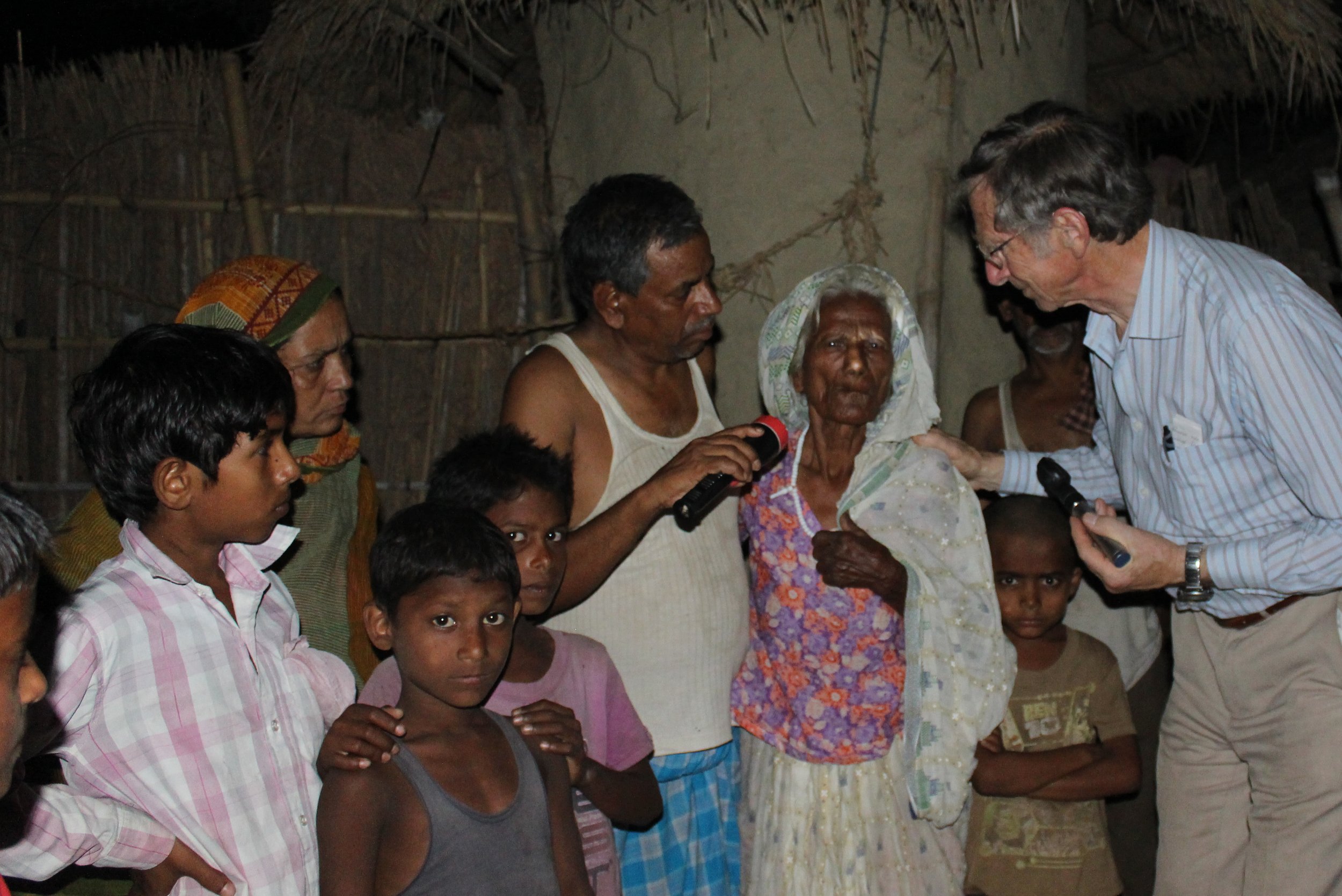
His gentle manner and courtesy were consistent, whether he was dealing with a wealthy, well turned-out private patient from Henly-on-Thames or a dirt-poor Bihari villager with nothing but the ragged clothes in which she stood. He was madly curious about people and set out to like them. I have met only a few other surgeons who took so much care to view the world from each patient’s perspective. Cultural and language differences presented no obstacles.
At Gems Hospital he had a patient who used to repair watches until blinded by cataract.
At the first post-operative examination Andy did more than the usual formal checking of vision and examination of the eye with a microscope. He took off his own watch and allowed his patient to spend a few delighted moments studying the clock face. In a photo taken at the time it is difficult to decide who looks more euphoric – the patient or the eye surgeon.
At Laxman Eye Hospital in Muzaffarpur, he observed that, in their efforts to process the large number of post-operative patients before sending them home, staff allowed them very little time to fully relish their first moments with restored sight. The eye pads they wore after surgery were whisked off only moments before they were positioned before a slit-lamp for doctors to examine.
Why not remove the pad, clean the eye on the ward, then allow the patient more time in the queue to adjust to and enjoy their second sight, suggested Andy.
The system was adopted.
The line of nervous, shuffling people of the first morning was replaced by a happy snake of women and men smiling and chatting to each other, a few teasing others about their appearance.
Amusing aside: I once asked an elderly woman if she was happy to see again. I addressed her as didi (elder sister). ‘Who are you calling didi ‘she asked with mock anger. ‘Now I can see you, I can see that you are as old as me.’
So plenty of laughs shared with Andy out in Bihar.
A few adventures he faced alone.
Once, a curfew in the border towns of Bihar and neighbouring Nepal threatened his arrival at the mission hospital at Raxaul. At that time Indian ophthalmologist Dr Helen Rao ran the busiest eye department in rural Bihar and hundreds of blind patients were being prepared for surgery by Andy.
He called me, just once, to apologise in advance should his operating list get delayed on account of the curfew. Dr Helen also called, to say she was making alternative travel arrangements.
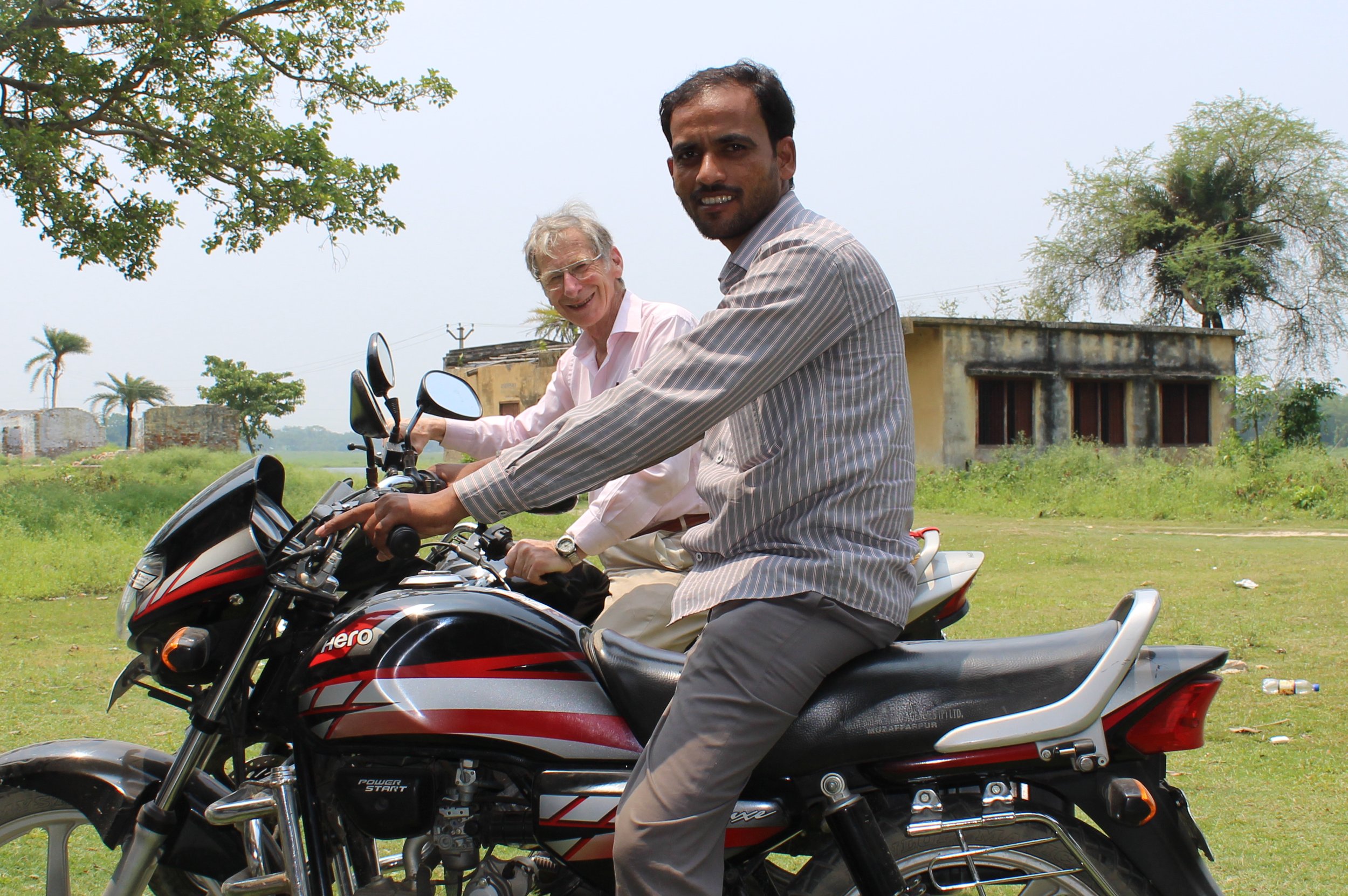
Andy spent the night as a pillion passenger, clutching his travel bag and bouncing over potholed roads in pitch darkness as first one, then another, completely silent motorcyclist followed orders to ferry him to a preordained location. Then abandoned him. A white bus from The Duncan Hospital eventually picked him up. Years later I learned that Andy had been a keen motorcyclist in his younger days and had rather enjoyed the thrill of that night escapade. What’s more his operating list began on time.
Throughout his long life Andy advised and volunteered for many sight charities.
But from 2003 onwards we got the lion’s share of his time and support. He came to us just after retirement, at the height of his surgical skills, clinical knowledge and global experience.
Second Sight assignments allowed him to do what he did best and for as long as he wished to – operating on blind patients from the most neglected communities in India, whilst embedded in skilled local teams as dedicated to this work as he was. He was always mindful of the fact that, while he worked terrifically hard for a month at a time, they kept to the same schedules all the year round. At one hospital, he noted that the theatre scrub nurses found it difficult to unwind after long working days in the operating theatre. So he introduced silly games to play at the end of a surgical session and organised away days on their one day off.
There came a time when we no longer needed to routinely send out visiting eye surgeons. What we had always dreamt of – a reverse brain drain of Bihari ophthalmologists, had began in earnest. Andy continued to accompany me on trips to visit some of these returnees. He would watch their surgery and commend their skills.
‘I have just witnessed a masterclass in small incision cataract surgery’ he told one doctor who was almost overcome by such praise from a senior surgeon.
We met a couple who had left lucrative jobs in Mumbai to return to their home state. Dr Jayshree was the eye surgeon. Andy discovered that they both shared a preference for a cataract surgical technique using an instrument called the fish hook. He praised her for this, congratulated her on her small, well-planned hospital and for her return to Bihar.
‘Oh it is we who should be honouring you’ she said. ‘We have only just come back to help our people. You were serving the poor in Bihar for no financial reward at all while we were earning money in Mumbai. You led by example.’
Andy Richards went all over the world to practice ophthalmology and no doubt led by example wherever he went. However, I believe that it was in Bihar that his talent, courtesy, humility and natural egalitarianism made the biggest impact.
So I am going to lay claim to Dr Andy Richards for Second Sight, for India, and for Bihar where I will be in a few days’ time. In hospitals all over the state they will be commemorating him in the manner which he would most approve of – by kicking off the busy winter operating season with vigour, great enjoyment and perhaps a touch of silliness to relax at the end of each day.
R.I.P
Dr Andy Richards